
Dry, Mold-Free Crawl Space and Basements: How to Choose the Right Dehumidifier

Dry, Mold-Free Crawl Space and Basements:
How to Choose the Right Dehumidifier
Is your crawlspace or basement feeling damp and musty? You are not alone.
These hidden areas of your home often become breeding grounds for mold and mildew, which can compromise your living environment and even your health. But fear not! A dehumidifier could be your ultimate solution for creating a dry, mold-free space.
We will explore the essential details of selecting the right dehumidifier tailored to your needs and how to make an informed choice.
Maintaining a Dry Crawl Space and Basement: Why This is Important
Having a dry crawlspace or basement is crucial to maintaining your home’s overall health.
These areas are often out of sight and out of mind, which means they can harbor conditions that go unnoticed until they become serious problems.
Moisture buildup in these spaces can lead to structural damage, create an environment conducive to pest infestations, and significantly impact indoor air quality.
Ensuring that these areas remain dry helps protect your home’s foundation and can save you from costly repairs down the line.
Moreover, a dry crawlspace or basement contributes to a healthier living environment. Water can seep into other parts of the house, raising humidity levels throughout the home.
High humidity can make your home feel less comfortable.
Furthermore, excessive humidity can even affect your HVAC system’s efficiency, causing it to work harder and increasing your energy bills.
By keeping these areas dry, you can improve your home’s comfort and energy efficiency.
A dry crawlspace or basement helps prevent mold and mildew growth, reducing associated health risks.
For example, mold spores can spread through the air and may trigger allergies and breathing difficulties.
Investing in moisture-control solutions, such as a dehumidifier, is therefore crucial for protecting both your home and your well-being.
Common Causes of Moisture in Crawl Spaces and Basements
Understanding the root causes of moisture in crawlspaces and basements is the first step toward effective moisture control.
- A significant contributor to moisture issues is water intrusion from the surrounding soil.
During periods of heavy rain or saturated soil, water can seep into your crawlspace or basement through cracks in the foundation or walls.
Water seepage is common in homes with inadequate drainage or in regions with a high water table.
Installing effective drainage solutions, such as sump pumps and exterior drainage systems, can help reduce this issue.
- Plumbing leaks can be a significant source of moisture in these areas.
Leaking pipes, water heaters, or other plumbing fixtures can introduce substantial moisture into the area and often remain undetected for extended periods.
Regularly inspect your plumbing and fix leaks as soon as they appear to help prevent moisture-related problems.
Identifying and fixing these familiar moisture sources is crucial for keeping your home dry and healthy.
Mold and Mildew Growth: Be Aware of the Dangers
Mold and mildew thrive in moist, humid environments, making crawl spaces and basements ideal breeding grounds.
Above all, mold and mildew significantly affect both your home’s structure and your family’s health.
- Mold Growth: Can structurally weaken materials, such as wood and drywall, leading to costly repairs and potential threats to your home’s stability.
- Health-wise: Mold exposure can provoke numerous symptoms, particularly among those with allergies or respiratory issues.
- Prolonged mold exposure: Leads to chronic respiratory issues, asthma attacks, and other severe health conditions.
Ensuring your crawlspace or basement stays mold-free is critical to the well-being of everyone in your household.
The Signs of Mold and Mildew Growth
Mold and mildew often release a musty smell that spreads throughout your home, creating an unpleasant living environment.
Mold and mildew odors can be challenging to eliminate and may require extensive cleaning and remediation.
By preventing mold and mildew growth through effective moisture control, you can maintain a healthier, more comfortable living environment.
How Dehumidifiers Work: Understanding The Science Behind Humidity Control
Dehumidifiers are essential tools for controlling humidity levels in crawlspaces and basements.
Specifically, dehumidifiers draw in moist air, remove moisture, and then release the dry air back into the room.
Different dehumidifiers use various methods to achieve this, including refrigerant-based and desiccant systems.
Refrigerant dehumidifiers are the most common and are effective in warmer environments, while desiccant dehumidifiers use moisture-absorbing materials and are suitable for cooler conditions.
Key Features to Look for in a Dehumidifier
When selecting a dehumidifier for your crawlspace or basement, several key features should be considered. One of the most important is the unit’s capacity, measured in pints per day (PPD).
PPD indicates how much moisture the dehumidifier can remove from the air over 24 hours. Choosing a dehumidifier with the appropriate capacity for your space ensures effective moisture control.
Another crucial feature to look for is the unit’s energy efficiency.
Choose units bearing the ENERGY STAR label, which comply with rigorous energy efficiency standards established by the U.S. Environmental Protection Agency.
Types of Dehumidifiers: Which One is Right for You?
There are several types of dehumidifiers available, each with its own set of advantages and disadvantages.
- Refrigerant dehumidifier:
Uses cooling coils to condense moisture from the air. These units are highly effective in warmer environments and are typically more affordable. - Desiccant dehumidifiers:
Uses moisture-absorbing materials to remove humidity from the air. These units are ideal for cooler environments and can operate efficiently at lower temperatures. - Whole-house dehumidifier:
Integrated into your home’s HVAC system. These units provide comprehensive humidity control throughout your entire home, including the crawlspace and basement.
Sizing Your Dehumidifier: How to Choose the Right Capacity
Selecting the appropriate capacity for your dehumidifier is vital for optimal moisture control.
The capacity you need depends on several factors:
- Size of your crawlspace or basement
- The level of humidity
- Severity of the moisture problem.
To determine the appropriate capacity, use a dehumidifier sizing chart that provides recommendations based on room size and humidity level.
It is essential to choose a dehumidifier that can handle the specific conditions of your crawlspace or basement to ensure optimal performance. The rule of thumb in the ‘code book’ is 70 PPD per 1000 sq ft of crawl space.
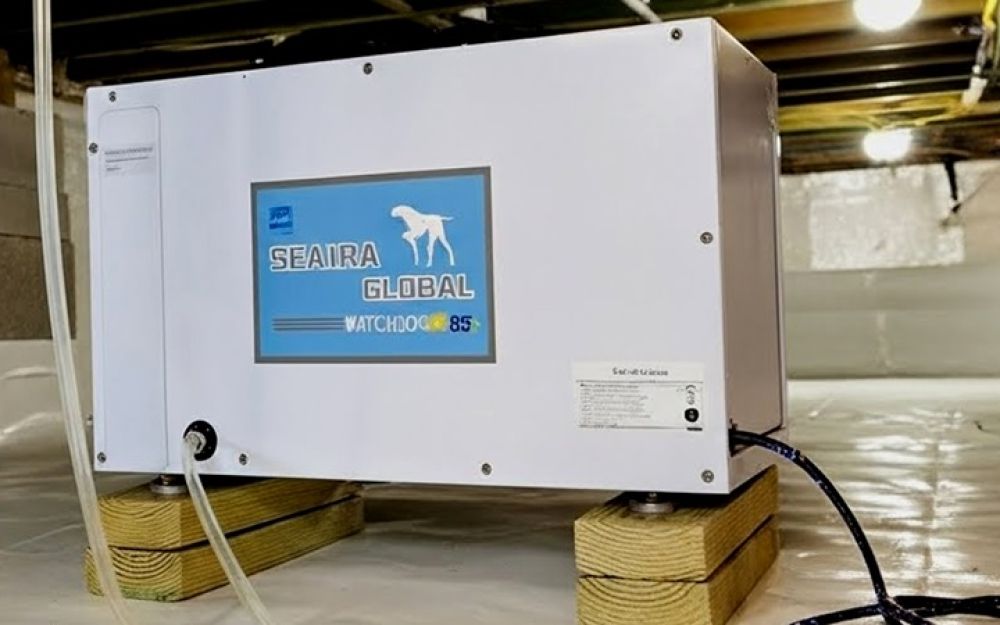
At BAY Crawl Space, we install a dehumidifier with a capacity of 80-120 PPD.
In addition to capacity, we place the dehumidifier in an optimal spot to boost its efficiency and performance.
Maintenance Tips for Keeping Your Dehumidifier Efficient
Regular maintenance is essential for keeping your dehumidifier running efficiently and effectively.
- Cleaning or replacing the air filter:
The air filter helps remove dust and other particles from the air, preventing them from clogging the unit’s components. - Inspection of the drainage hose to ensure it’s not clogged or kinked. Keeping the water-removal system in good working order is crucial to maintaining the unit’s efficiency.
Additionally, it is essential to periodically clean the dehumidifier’s coils and other internal components.
Dust, dirt, and debris can accumulate on the coils, reducing the unit’s efficiency and potentially causing it to overheat.
Additional Moisture Control Solutions for Crawlspaces and Basements
Here are additional solutions that can help keep your crawlspace or basement dry.
- Installing a vapor barrier on the walls and floor of your crawl space:
A vapor barrier prevents moisture from seeping through the foundation and into the space, reducing humidity levels and preventing mold growth. - Improving drainage around your home:
Ensure that your gutters and downspouts are not damaged or clogged, and are directing water away from your foundation.
TIP: Consider installing a French drain or other drainage system to help manage water runoff and prevent it from accumulating around your home’s foundation.
- Seal cracks or gaps in your foundation and walls: Sealing helps prevent moisture intrusion.
In conclusion, maintaining a dry, mold-free crawlspace or basement is essential to your home’s overall health and safety.
By understanding the value of moisture control, identifying familiar moisture sources, and selecting the right dehumidifier, you can foster a healthier home environment.
Regular maintenance and additional moisture-control solutions can further enhance the effectiveness of your efforts, ensuring a dry, comfortable home for years to come.
Explore how BAY Crawl Space & Foundation Repair blends advanced foundation science with a homeowner-first mindset, offering free photo inspections, flexible financing, and a lifetime workmanship guarantee. Let’s take that next step together and unlock absolute clarity for your home’s structure. Schedule your free inspection and estimate today!