

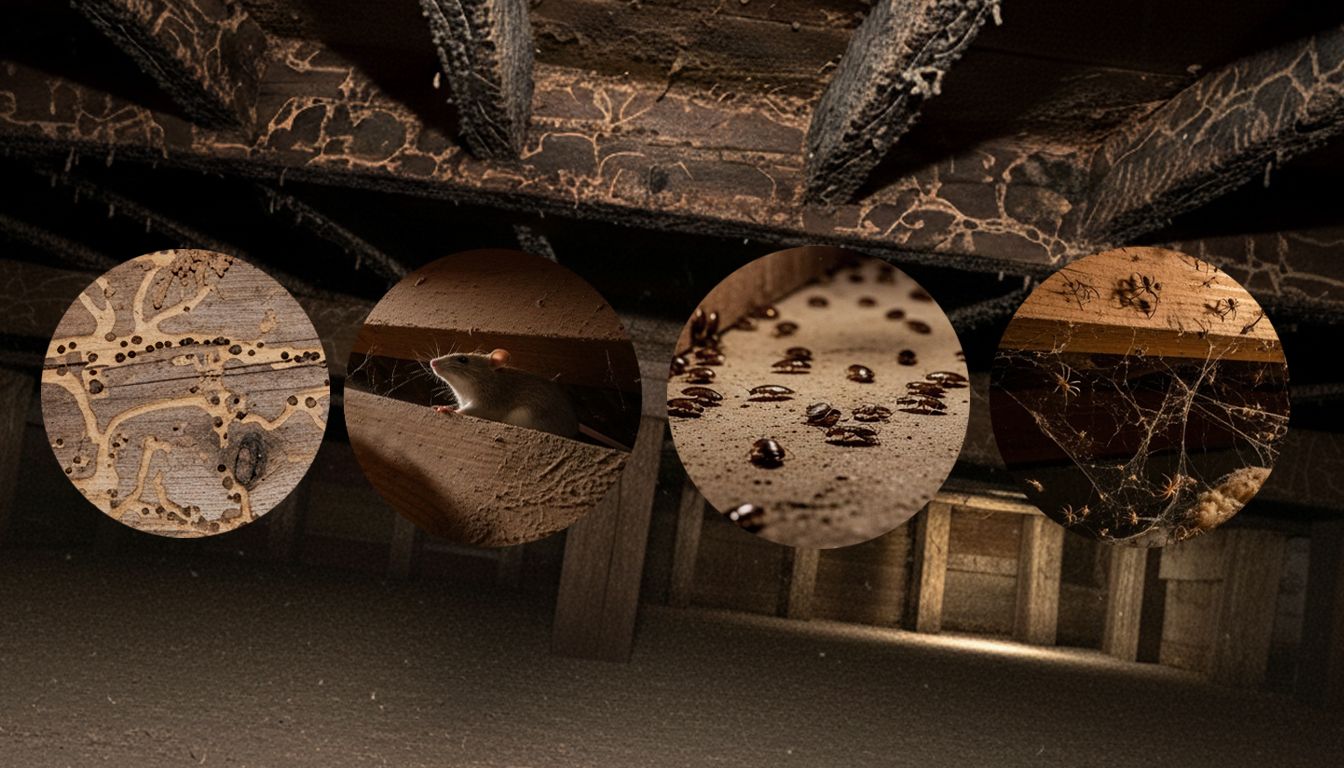

Managing Crawl Space Pests:
Protecting Your Home from the Ground Up
A home’s crawl space is a vital part of its foundation, but because it is “out of sight, out of mind,” it often becomes a sanctuary for invasive pests. On the East Coast, the combination of high humidity and soil contact creates a perfect environment for insects and rodents that can threaten your property’s structural integrity and your family’s health.
At BAY Crawl Space & Foundation Repair, we specialize in transforming these vulnerable areas into clean, dry environments that discourage pest activity and protect your investment.
- Wood-Destroying Organisms: Termites and Wood Boring Insects
The most serious threats to your home’s structure are wood-boring insects. These pests feed on or nest within the wooden supports of your crawl space, often going unnoticed until significant damage occurs.
- Subterranean Termites: Known as “silent destroyers,” these termites tunnel from the soil into your wood joists. According to the Environmental Protection Agency (EPA), they cause billions of dollars in structural damage annually.
- Powderpost Beetles: Second only to termites in destructiveness, these beetles lay eggs in wood cracks. Their larvae eat the wood from the inside out, leaving behind a fine, flour-like “frass” and tiny pin-sized exit holes.
- Other Wood-Borers: Various beetles, such as those from the Anobiidae and Bostrichidae families, thrive in high-moisture environments.
Structural Note: If your crawl space has already been infested with wood-destroying insects, we provide expert structural repair services to replace compromised beams and joists.
- Rodents and Health Hazards
Mice and rats are frequently drawn to crawl spaces for shelter and nesting. Unfortunately, they rarely stay confined to that area.
- Damage to Infrastructure: Rodents have a constant need to gnaw, often targeting insulation and electrical wiring, which can create significant fire hazards.
- Disease Transmission: The Centers for Disease Control and Prevention (CDC) warns that rodents can spread dangerous pathogens like Hantavirus through their droppings and nesting materials.
- Our Solution: We offer a thorough rodent removal process that includes sanitization and entry-point sealing to help keep them out for good.
- Moisture-Loving Nuisances: Crickets, Spiders, and Roaches
Many pests aren’t looking for wood; they’re looking for moisture. High humidity and standing water in a crawl space attract a variety of nuisance pests.
- Camel Crickets: Often called “spider crickets,” these pests thrive in environments with over 70% humidity. Their presence is usually an indicator of a chronic moisture problem.
- Oriental Cockroaches: Commonly known as “waterbugs,” these roaches prefer cool, damp crawl spaces. CDC health guidelines note that roach allergens can be a significant trigger for asthma and respiratory issues.
- Spiders & Ants: These pests are naturally attracted to the high-moisture habitats that support their prey, like crickets and smaller insects.
The Permanent Solution: Encapsulation
The most effective way to manage these pests is to change the environment they depend on. By sealing out soil moisture and regulating humidity, you remove the primary reason these pests invade.
- Vapor Barriers: Installing a heavy-duty liner prevents moisture from rising out of the dirt.
- Dehumidification: Maintaining relative humidity below 60% makes the space uninhabitable for camel crickets and wood-boring beetles.
- Encapsulation: This comprehensive approach seals vents and entry points, creating a conditioned space that protects your entire home.
Seasonal Crawl Space Maintenance Checklist
Maintaining a dry, pest-free crawl space requires consistent oversight. Use this checklist each season to catch issues like wood-boring insects or rodent activity before they become costly structural problems.
- Exterior Perimeter & Foundation
- Check for Termite Mud Tubes: Look for pencil-sized mud tunnels climbing up foundation walls. The EPA provides visual guides for identifying these early signs of infestation.
- Inspect Wood-to-Ground Contact: Ensure no wooden siding, trim, or stairs touch the soil, as this creates a direct “highway” for termites and powderpost beetles.
- Clear Debris: Remove piles of firewood, mulch, or dead leaves from against the foundation. These are primary nesting sites for rodents and ants.
- Verify Drainage: Ensure gutters are clear and downspouts discharge at least 6 feet away from the foundation to prevent water from seeping into the crawl space.
- Interior Inspection (Pests & Structural)
- Look for “Frass”: Search for fine, flour-like powder under floor joists, which indicates active powderpost beetles.
- Identify Rodent Signage: Check for droppings, chewed insulation, or nesting material. If you find evidence, refer to CDC safety protocols for cleaning rodent-infested areas to avoid disease exposure.
- Check Wood Density: Use a screwdriver to probe floor joists and the sill plate gently. If the wood feels soft or “spongy,” it may be damaged by moisture or wood-boring insects. Learn more about our structural repair solutions.
- Moisture & Air Quality
- Monitor Humidity Levels: Use a hygrometer to ensure relative humidity stays below 60%. High humidity attracts camel crickets and fosters the growth of wood-rotting fungi.
- Inspect the Vapor Barrier: Ensure your vapor barrier is intact, covering 100% of the ground, and not holding standing water on top.
- Check the Dehumidifier: Change filters according to the manufacturer’s schedule and verify the condensate pump is discharging water correctly outside the home.
- Smell for Mustiness: A “damp” or “earthy” smell often indicates mold growth or high moisture levels that attract roaches and waterbugs.
Pro-Tip: The “Flashlight Test”
Once a month, turn off your crawl space lights and use a high-powered flashlight to scan for “eye shine” (indicating spiders or rodents) or glistening trails (indicating slugs or silverfish). If you notice a sudden influx of pests, it’s often a sign that your crawl space has been compromised.
Download Your Seasonal Crawl Space Maintenance Checklist:
Seasonal Crawl Space Maintenance Checklist
A guide to protecting your home’s structural integrity and health.
1. Exterior Perimeter & Foundation
- Identify Termite Mud Tubes: Inspect foundation walls for pencil-sized mud tunnels. The EPA notes these as primary indicators of subterranean termite activity.
- Check Wood-to-Ground Contact: Ensure no wooden supports or siding touch the soil, which prevents access for powderpost beetles.
- Clear Habitat Debris: Remove firewood, mulch, or leaf piles from the foundation to discourage rodent nesting.
- Verify Drainage: Confirm gutters are clear, and downspouts discharge at least 6 feet from the home to prevent crawl space flooding.
2. Interior Inspection (Pests & Structural)
- Check for Wood-Boring Evidence: Look for tiny exit holes or fine, flour-like “frass” indicating powderpost beetle larvae activity.
- Locate Rodent Entry Points: Search for chewed insulation, droppings, or nesting material. Follow CDC safety protocols if cleaning infested areas.
- Structural Integrity Test: Gently probe floor joists with a screwdriver. Spongy wood may indicate wood-boring insect damage or advanced rot.
- Identify Moisture Pests: Look for camel crickets or silverfish, which signify a humidity problem.
3. Humidity & Air Quality Control
- Monitor Relative Humidity: Use a hygrometer to ensure levels stay below 50%. High humidity attracts wood-rotting fungi and water-loving pests.
- Inspect the Vapor Barrier: Ensure your vapor barrier is properly pinned and not holding standing water.
- Dehumidifier Maintenance: Change filters and ensure the condensate pump is discharging correctly outside the home.
- Smell Check: Investigate any musty odors immediately, as these often signal mold growth or pest infestations.
Professional Support
If you identify any of the red flags above, don’t wait for the damage to spread.
- Request a Professional Inspection: Schedule Your Free Inspection
- Structural Repair Services: View Repair Options
- Encapsulation Solutions: Learn About Moisture Control