
Structural Repair Simplified: A Guide to Crawl Space Foundation Repair
Are you noticing cracks in your drywall or feeling like you’re walking downhill in your own living room? Structural repair can sound like a daunting, complex nightmare for any homeowner. However, understanding what is happening beneath your feet is the first step to fixing it.
How Your Home is Supported
To understand where problems come from, you first need to know how your home was built. Think of your house as being supported from the bottom up.
For homes with a crawl space, the foundation consists of two main parts:
- The Continuous Perimeter: This supports the outside walls of your home.
- Individual Footings: These support the piers, which in turn carry the heavy load of your floor system.
Ideally, these footings are designed to hold your home with zero movement. When things start moving, that’s when you have a problem.
Diagnosing the Problem: The First Rule of Thumb
How do you know if you have a structural issue? The first rule of thumb is simple: Cracking and uneven floors tell us there has been movement.
It wasn’t like that when the house was built. If you see these signs, your next goal is to identify exactly what has moved. It could be one of several culprits:
- The foundation itself is failing.
- A pier settling into the earth.
- Beams bowing or twisting.
- Wood members are compressing under the weight of the house.
- Floor joists sagging or rotting.
- Supports installed in the wrong location during original construction.
The Importance of a Structural Drawing
Accurate diagnosis usually requires a structural drawing. This map of your foundation allows experts to see exactly how different areas of your home are being supported (or unsupported). Once you have a clear drawing, identifying the root cause—or multiple causes—becomes much easier.
The Solution: “If It Moves, It Needs Support”
The second rule of thumb is just as straightforward as the first: If something is moving, it doesn’t have enough support. Therefore, it needs more support.
While every home is different, the industry has developed specific, reliable solutions for each type of structural failure.
- Foundation Settling
The Problem: The home’s perimeter is sinking into the soil.The Solution: Stabilization. GridLock Foundation stabilizers- engineered to stabilize your foundation. They are much stronger than traditional push piers. Where lifted push piers often fail, our Foundation Stabilizers have a lifetime guarantee.
- Sagging Joists and Over-Spanning
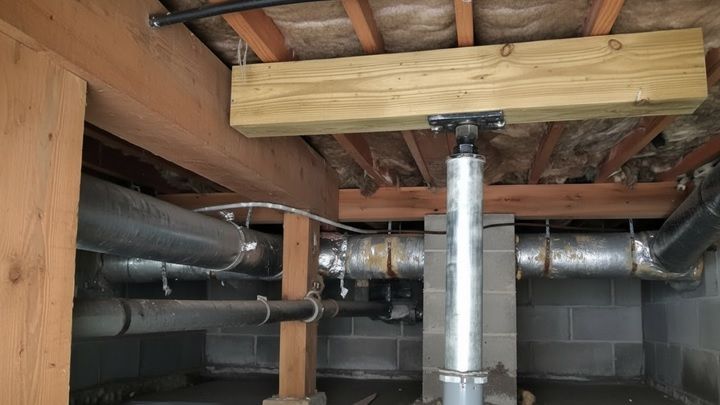
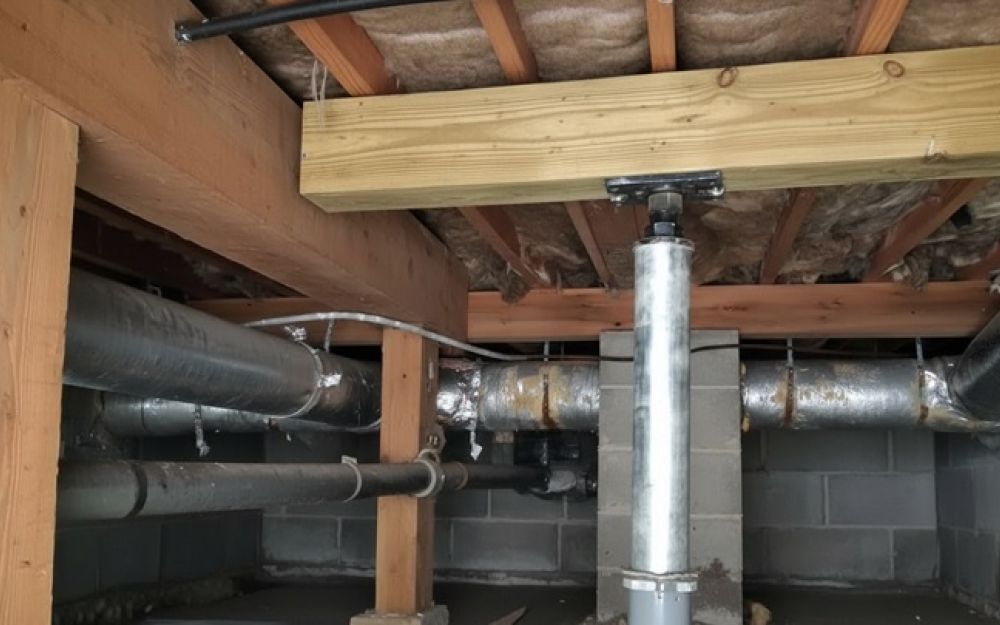
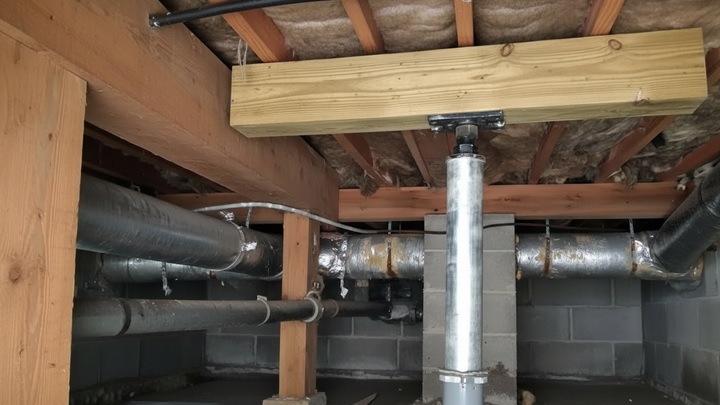
The Problem: The floor feels bouncy or is sagging because the joists are spanning too long a distance without support.The Solution: Additional Floor Supports with a new supplemental beam.We often use Titan Adjustable Crawl Jacks. These stabilizing jacks not only support the structure but offer an adjustable feature that gives the best opportunity to lift and correct the floor levels.
- Rotten or Damaged Wood
The Problem: Moisture in the crawl space has caused beams, joists, or sill plates to rot.The Solution:- Beams: May need full replacement or alternative reinforcement.
- Joists: Often repaired by “Sistering,” which involves installing an identical-size joist right next to the damaged one to restore strength.
- Sill Plates: Should be replaced if damaged by moisture.
- Subfloor Issues
The Problem: The subfloor (the layer right under your carpet or hardwood) is weak or damaged.The Solution: Subfloor Plating. This process allows the subfloor to be repaired from underneath, avoiding the need to rip up your finished flooring inside the house.
Get a Professional Opinion
Structural repair doesn’t have to be a mystery. By understanding the “why” and “how” of your foundation, you can make better decisions for your home.
If you live in Hampton Roads, Virginia Beach, or anywhere within a 80-mile radius of our HQ, don’t guess about your foundation’s health.
Contact Bay Crawl Space & Foundation Repair today for a free inspection. Our highly trained inspectors will provide a full diagnosis and help you get your home back on solid ground.